
Starlink in Uganda: What is Starlink Satelite Internet and how it works
Masters Of Sites
29/05/2026
Starlink in Uganda: What is Starlink Satellite Internet and How Does It Work?
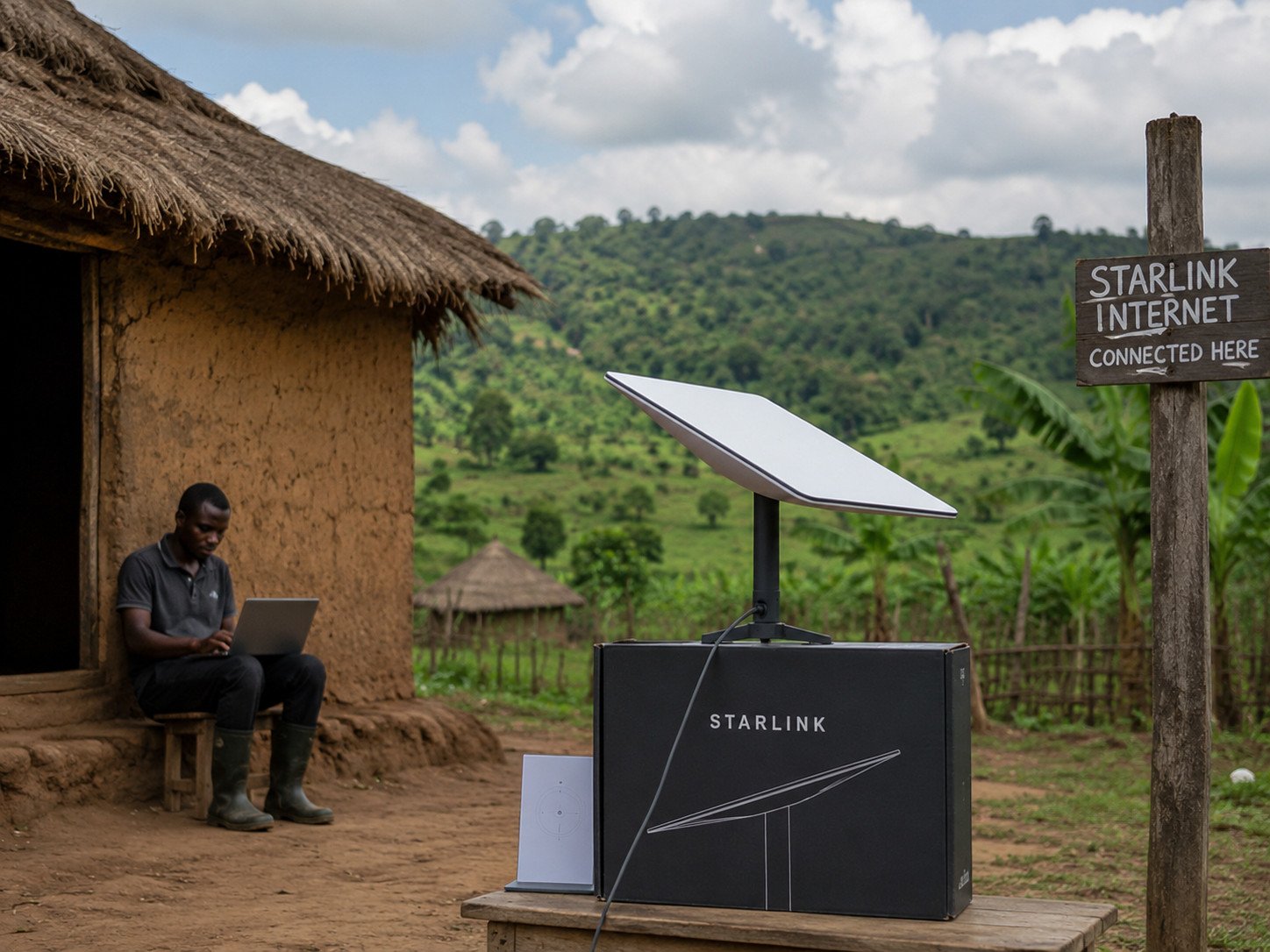
Starlink disabled all access to its global network within Uganda as of 1 January 2026, leaving thousands without the satellite internet service they had been using. Understanding how Starlink satellite internet works has become increasingly important for Ugandans following the sudden disruption.
The shutdown followed a regulatory directive issued on 19 December 2025 by the Uganda Revenue Authority (URA), restricting the importation of Starlink equipment without military authorization.
In this article, we explain what Starlink satellite internet is, how Starlink works, why the service was suspended in Uganda, and the latest developments regarding Starlink Uganda operations.
What is Starlink Satellite Internet?
Starlink is a satellite internet service operated by SpaceX through its subsidiary, Starlink Services, LLC. The service uses a massive constellation of satellites placed in low Earth orbit (LEO) to provide high-speed internet access worldwide.
Unlike traditional satellite internet systems that rely on satellites positioned far away in geostationary orbit, Starlink satellites orbit much closer to Earth at approximately 340 to 570 kilometers above the surface.
This shorter distance significantly reduces latency and improves internet performance.
As of March 2026, Starlink operates more than 10,020 satellites globally and serves over 6 million users across approximately 150 countries and territories.
The service is especially useful in:
- Rural areas
- Remote communities
- Islands and fishing communities
- Schools in underserved regions
- Maritime vessels
- Areas with weak fiber or mobile internet coverage
Users require a Starlink kit, which includes:
- A Starlink satellite dish
- A Wi-Fi router
- Power cables
- Mounting equipment
Once activated, the dish communicates directly with Starlink satellites overhead to provide internet access.
How Does Starlink Satellite Internet Work?
Starlink internet works using a network of low Earth orbit satellites, ground stations, and user terminals.
1. Starlink User Terminal (Dish)
The Starlink dish installed at a home, school, office, or remote location acts as the connection point between the user and satellites in space.
Unlike older satellite dishes that physically rotate, Starlink uses phased array antenna technology.
This technology electronically directs radio signals without moving mechanical parts.
2. Beamforming Technology
Starlink uses beamforming to maintain stable communication with fast-moving satellites.
Satellites orbit Earth at roughly 27,000 kilometers per hour, meaning the dish must continuously switch between satellites.
Electronic steering allows the terminal to track satellites efficiently and maintain uninterrupted internet connectivity.
3. Data Transmission Process
When a user opens a website or streams content:
- The request travels from the Starlink dish to a nearby satellite.
- The satellite sends the data to a ground gateway station.
- The gateway station connects to terrestrial fiber networks and the global internet.
- Data returns through the same route back to the user.
Second-generation Starlink satellites also use inter-satellite laser links.
These laser systems allow satellites to communicate directly with one another in space, reducing dependence on nearby ground stations and improving performance in remote regions.
Why is Starlink Faster Than Traditional Satellite Internet?
Traditional satellite internet providers typically use geostationary satellites positioned approximately 35,786 kilometers above Earth.
Because of this long distance, users often experience:
- High latency
- Slow speeds
- Delays during video calls and gaming
Starlink satellites orbit much closer to Earth, reducing signal travel time significantly.
Current Starlink performance averages include:
- Download speeds approaching 200 Mbps
- Latency averaging around 25 milliseconds
- Faster response times for streaming, gaming, and video conferencing
This makes Starlink competitive with many fiber and mobile broadband services.
Starlink Uganda: What Happened in January 2026?
Before January 2026, many Ugandans accessed Starlink using terminals purchased and activated in neighboring countries where the service was officially licensed.
The equipment was then imported and used locally without formal authorization.
On 19 December 2025, the Uganda Revenue Authority introduced restrictions on Starlink equipment imports.
Under the directive:
- Starlink devices required military authorization
- Customs clearance became restricted
- Unauthorized importation was blocked
Following the directive, Starlink disabled access to its global network within Uganda on 1 January 2026.
This immediately affected thousands of users who relied on the service for:
- Remote work
- Education
- Business operations
- Rural internet access
- Island connectivity
The timing attracted significant attention because Uganda held general elections on 15 January 2026.
The country had also experienced a national internet shutdown during the 2021 elections.
Latest Starlink Uganda Developments
A major breakthrough occurred on 15 May 2026 when President Yoweri Museveni presided over the signing of an operational licensing agreement between the Uganda Communications Commission (UCC) and Starlink.
The agreement allows Starlink to officially operate in Uganda under several conditions.
Conditions for Starlink Operations in Uganda
Starlink must:
- Establish a national gateway within Uganda
- Maintain a physical office or point of presence in Uganda
- Register all activated devices
- Comply with local telecommunications regulations
This approval is expected to pave the way for legal Starlink services across Uganda.
Benefits of Starlink Internet in Uganda
Starlink has the potential to transform internet access across Uganda, particularly in underserved regions.
Key Benefits Include:
Improved Rural Connectivity
Many rural areas still lack reliable fiber infrastructure. Starlink can bridge this digital gap.
Better Internet for Schools
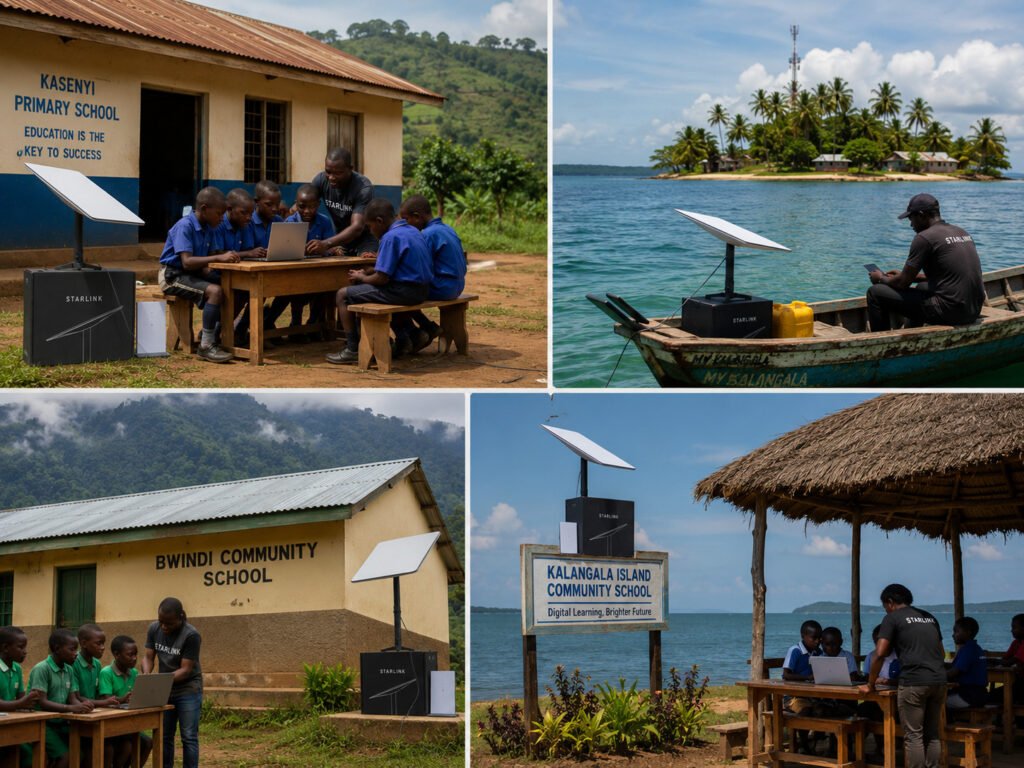
Remote schools and learning centers can gain access to online education resources and digital classrooms.
Connectivity for Islands and Fishing Communities
Island communities on Lake Victoria and remote fishing villages can access reliable communication and internet services.
Support for Businesses
Businesses operating in remote areas can benefit from stable high-speed internet for communication and operations.
Disaster Recovery and Backup Internet
Starlink can serve as a backup internet solution during fiber outages or network disruptions.
Challenges Facing Starlink in Uganda
Despite the opportunities, several challenges remain.
High Equipment Costs
The initial Starlink hardware kit may still be expensive for many households and small businesses.
Regulatory Oversight
The government requires strict compliance with telecommunications and security regulations.
Power Reliability
Some rural areas still face electricity challenges, requiring solar backup systems or batteries.
Weather Conditions
Heavy storms and rainfall can occasionally affect satellite signal quality.
The Future of Starlink in Uganda
The approval of Starlink operations marks an important step toward expanding internet access in Uganda.
If fully implemented, Starlink could significantly improve connectivity for:
- Rural schools
- Hospitals
- NGOs
- Tourism facilities
- Farmers
- Remote businesses
- Islands and border communities
As Uganda continues to grow its digital economy, satellite internet solutions like Starlink may become a major part of the country’s internet infrastructure.
Conclusion
Starlink satellite internet uses a network of low Earth orbit satellites to provide high-speed internet with lower latency than traditional satellite providers.
The technology offers major opportunities for Uganda, especially in rural and underserved areas where traditional internet infrastructure remains limited.
Although Starlink services were disabled in Uganda on 1 January 2026 due to regulatory restrictions, the licensing agreement signed in May 2026 signals a possible return of legal operations.
If regulatory requirements are successfully implemented, Starlink could play a major role in improving digital access, education, business connectivity, and communication across Uganda.
Recent Post
-
 19 Sep 2026How Starlink Works, Packages, Kits and Installation Costs
 -
 02 Sep 2026Starlink Is Now Fully Available in Uganda
 -
 29 May 2026Starlink in Uganda: What is Starlink Satelite Internet and how it works
 -
 09 Apr 2026Choosing the Best Fibre Internet in Uganda (2026): A Complete Guide for Homes, Businesses & Hotspots
 -
22 Jun 2025Building Strong WiFi Hotspots & Networks in Africa: What It Really Takes
-
21 Apr 2025Starlink's Entry into Uganda
-
 13 Dec 2024My WhatsApp is Hacked
 -
 29 Oct 2024Choosing the Best Fibre Internet in Uganda




Get MTN Discounts Now!
| Provider | Plan | Speed Up to | Monthly Cost (UGX) |
|---|---|---|---|
| MTN WakaNet | Lite | 100 Mbps | 99,000 |
| Standard | 200 Mbps | 130,000 | |
| Premium | 500 Mbps | 270,000 |
Categories
Grow Your Business Today
With the best website design agency in Uganda.
Empower your business growth with our innovative solutions and strategic expertise. Start expanding your success today with our comprehensive services.