
Starlink Is Now Fully Available in Uganda
Masters Of Sites
02/09/2026
Starlink Is Now Fully Available in Uganda: What This Means for Internet Connectivity
Uganda’s internet landscape has taken another major step forward with the arrival of Starlink’s high-speed, low-latency satellite internet service.
Starlink has announced that its service is now available in Uganda, bringing satellite-powered broadband connectivity to homes, businesses and communities across the country. The announcement is significant because Starlink’s technology is designed to provide high-speed internet even in locations where traditional fixed-line or mobile connectivity can be limited.
The company recently stated on X:
“Starlink’s high-speed, low latency internet is now available in Uganda.”
This development could have a major impact on how people and businesses in Uganda access reliable internet.
What Is Starlink?
Starlink is a satellite internet service operated by SpaceX. Unlike traditional internet services that depend heavily on underground fibre cables, terrestrial wireless networks or mobile towers, Starlink connects users through a network of satellites in low Earth orbit.
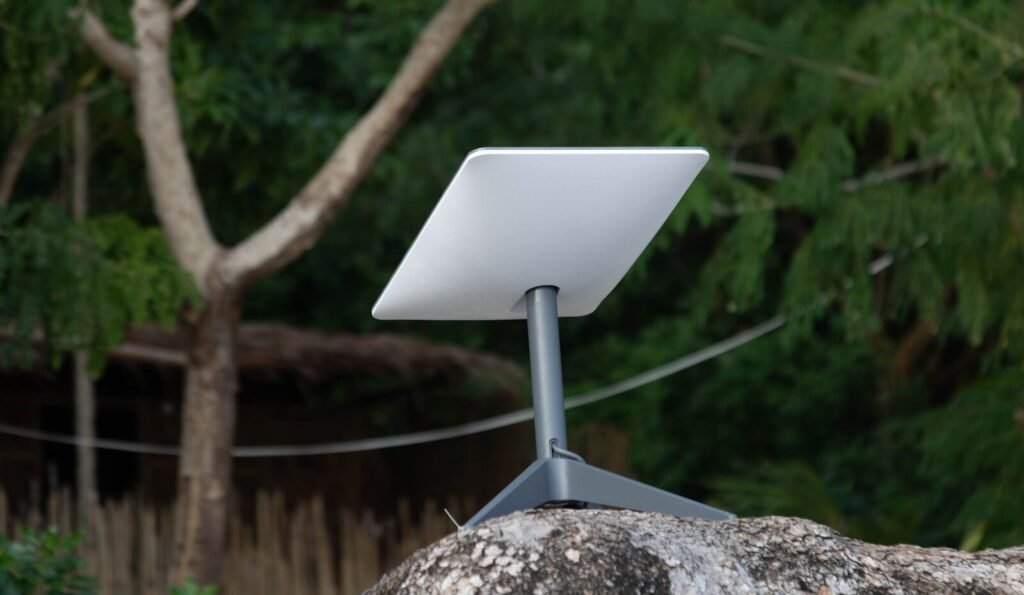
Customers use a Starlink user terminal, commonly known as a Starlink dish, together with the supplied networking equipment to establish an internet connection.
Starlink says its service is designed to provide reliable broadband connectivity in locations where high-speed internet has traditionally been expensive, unreliable or unavailable. citeturn0news10turn0search23
Why Starlink’s Arrival Matters for Uganda
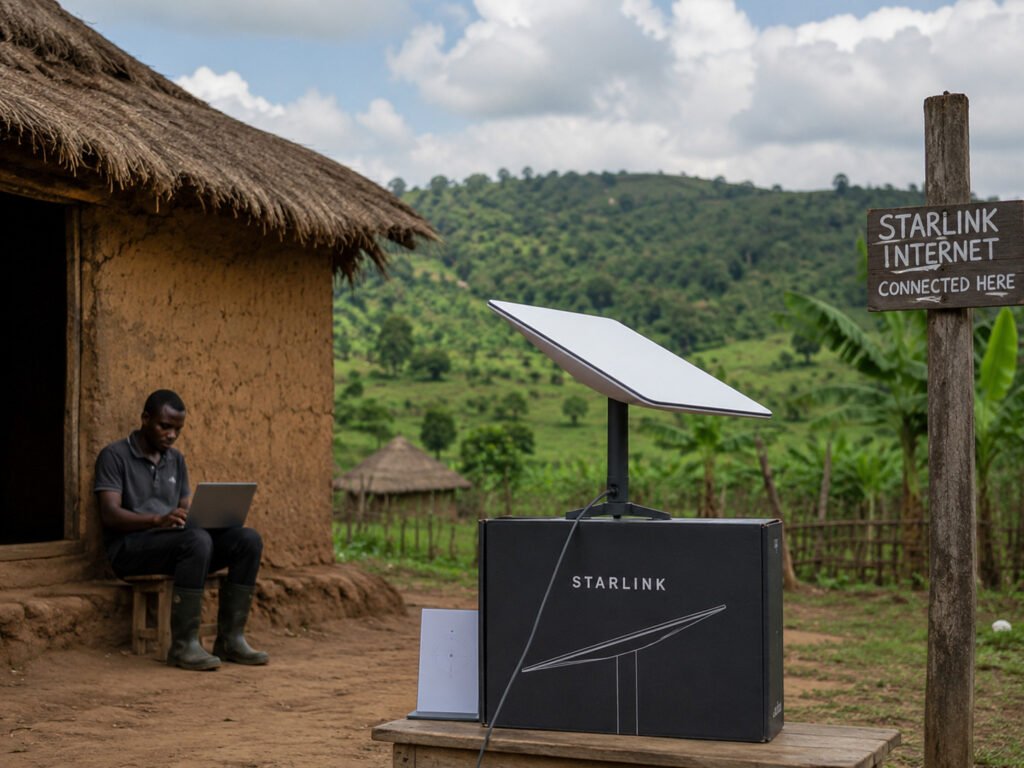
For many Ugandans, access to fast and reliable internet still depends on whether fibre infrastructure, mobile coverage or other telecommunications infrastructure is available in their particular location.
This is particularly important for people living or operating businesses outside major urban centres.
Starlink’s satellite-based approach changes the equation.
Instead of waiting for fibre infrastructure to reach an area, users can potentially access broadband connectivity by installing the Starlink equipment at a location with a suitable view of the sky.
This could open new opportunities for:
Rural households
Businesses outside major towns
Schools and educational institutions
Farms and agricultural businesses
Hotels and lodges
Construction sites
NGOs and field operations
Remote workers
Small and medium-sized businesses
Organisations operating in areas with limited connectivity
High-Speed Internet Without Traditional Fibre Infrastructure
One of Starlink’s biggest advantages is its ability to provide connectivity without requiring a conventional fibre connection to every premises.
Starlink’s published specifications indicate typical download speeds can range from approximately 25 Mbps to 220 Mbps, with a majority of users experiencing speeds above 100 Mbps under the referenced specifications. Typical land latency is listed at approximately 25–60 milliseconds. Actual speeds and latency can vary depending on location, network conditions, congestion and service plan.
For Uganda, this could be particularly valuable in locations where extending fibre infrastructure is difficult or costly.
What Can Ugandans Use Starlink For?
The possibilities extend far beyond simply browsing the internet.
1. Working From Home
Remote workers can use a reliable internet connection for cloud applications, email, video meetings, file sharing and other online work.
For professionals who live outside areas with dependable fibre connectivity, satellite broadband could provide another option for staying connected.
2. Online Education
Schools and students increasingly depend on online educational resources.
A reliable broadband connection can help institutions access digital learning platforms, educational videos, cloud-based resources and virtual classes.
This could be particularly valuable for schools located away from major urban centres.
3. Business Connectivity
Businesses require dependable connectivity for payments, communication, cloud software, websites, social media, online meetings and other digital services.
Starlink also offers business-oriented connectivity options designed for organisations that require reliable high-speed internet.
4. Video Conferencing
Low-latency connectivity can make services such as online meetings, remote collaboration and video conferencing more practical.
This is increasingly important as Ugandan businesses work with customers, suppliers and teams located in different countries.
5. Streaming and Entertainment
High-speed broadband can support activities such as video streaming, music streaming and online gaming.
Starlink states that its connectivity is suitable for streaming, video calls, gaming and other common internet activities.
Could Starlink Change Uganda’s Internet Market?
The introduction of another major connectivity option could increase competition within Uganda’s internet market.
Traditional internet providers remain important, particularly where fibre and mobile networks already provide strong coverage. However, satellite internet introduces another option for customers who may not have access to suitable terrestrial infrastructure.
This could encourage providers across the industry to continue improving:
Internet speeds
Reliability
Pricing
Customer service
Rural coverage
Business connectivity solutions
Ultimately, consumers and businesses could benefit from having more choices.
Starlink Is Not Just About Rural Areas
Although rural connectivity is one of the most obvious opportunities, Starlink isn’t necessarily limited to remote locations.
Businesses, organisations and households in urban and suburban areas may also consider satellite internet as an alternative or backup connection.
For businesses that depend heavily on internet access, having a secondary connection can provide additional resilience when the primary connection experiences an outage.
For example, a company could use fibre as its primary connection while maintaining Starlink as a backup connection, subject to the applicable service and network configuration.
What About Speed?
It is important to understand that Starlink does not guarantee one fixed internet speed for every customer.
Starlink’s published specifications explain that performance can vary based on factors such as location, time of day, network usage and service plan.
Therefore, customers should avoid assuming that every Starlink installation in Uganda will automatically deliver the same speed.
The actual experience will depend on the specific location and service conditions.
What Does Installation Require?
Starlink is designed around a relatively straightforward installation process.
The system generally consists of a Starlink user terminal, Wi-Fi router, power equipment and mounting hardware. Starlink describes its system as being designed for self-installation, with users needing an appropriate location and a clear view of the sky.
However, businesses and larger organisations may benefit from professional installation and network configuration, particularly where Starlink needs to be integrated into an existing network.
Starlink and the Future of Connectivity in Uganda
Uganda is becoming increasingly dependent on digital connectivity.
From mobile money and e-commerce to online education, digital banking, cloud computing, remote employment and social media, reliable internet has become an important part of everyday life and economic activity.
The arrival of Starlink provides another technological pathway for expanding broadband access.
Rather than replacing every existing internet provider, satellite connectivity can complement existing infrastructure and help connect locations where conventional broadband infrastructure is difficult to deploy.
A New Chapter for Uganda’s Internet Industry
Starlink’s availability in Uganda represents more than the arrival of another internet provider.
It demonstrates how satellite technology is increasingly becoming part of the global broadband ecosystem.
For Uganda, the potential benefits could be particularly significant in areas where geographical challenges, infrastructure costs or limited network coverage have historically made reliable broadband difficult to access.
As more Ugandans, businesses and institutions explore satellite internet, the country’s connectivity landscape could become more competitive, flexible and accessible.
Starlink is now part of Uganda’s internet story — and its impact could extend well beyond simply providing another way to get online.
Final Thoughts
The arrival of Starlink gives Ugandan consumers and businesses another option for accessing high-speed internet.
Whether it becomes a primary connection, a solution for remote locations or a backup connection for businesses, its availability introduces an important new technology into Uganda’s telecommunications market.
As availability expands and customers begin using the service across different parts of the country, real-world performance, pricing and customer experiences will provide an even clearer picture of Starlink’s long-term impact on Uganda’s digital economy.
Why is Starlink Faster Than Traditional Satellite Internet?
Traditional satellite internet providers typically use geostationary satellites positioned approximately 35,786 kilometers above Earth.
Because of this long distance, users often experience:
- High latency
- Slow speeds
- Delays during video calls and gaming
Starlink satellites orbit much closer to Earth, reducing signal travel time significantly.
Current Starlink performance averages include:
- Download speeds approaching 200 Mbps
- Latency averaging around 25 milliseconds
- Faster response times for streaming, gaming, and video conferencing
This makes Starlink competitive with many fiber and mobile broadband services.
Starlink Uganda: What Happened in January 2026?
Before January 2026, many Ugandans accessed Starlink using terminals purchased and activated in neighboring countries where the service was officially licensed.
The equipment was then imported and used locally without formal authorization.
On 19 December 2025, the Uganda Revenue Authority introduced restrictions on Starlink equipment imports.
Under the directive:
- Starlink devices required military authorization
- Customs clearance became restricted
- Unauthorized importation was blocked
Following the directive, Starlink disabled access to its global network within Uganda on 1 January 2026.
This immediately affected thousands of users who relied on the service for:
- Remote work
- Education
- Business operations
- Rural internet access
- Island connectivity
The timing attracted significant attention because Uganda held general elections on 15 January 2026.
The country had also experienced a national internet shutdown during the 2021 elections.
Latest Starlink Uganda Developments
A major breakthrough occurred on 15 May 2026 when President Yoweri Museveni presided over the signing of an operational licensing agreement between the Uganda Communications Commission (UCC) and Starlink.
The agreement allows Starlink to officially operate in Uganda under several conditions.
Conditions for Starlink Operations in Uganda
Starlink must:
- Establish a national gateway within Uganda
- Maintain a physical office or point of presence in Uganda
- Register all activated devices
- Comply with local telecommunications regulations
This approval is expected to pave the way for legal Starlink services across Uganda.
Benefits of Starlink Internet in Uganda
Starlink has the potential to transform internet access across Uganda, particularly in underserved regions.
Key Benefits Include:
Improved Rural Connectivity
Many rural areas still lack reliable fiber infrastructure. Starlink can bridge this digital gap.
Better Internet for Schools
Remote schools and learning centers can gain access to online education resources and digital classrooms.
Connectivity for Islands and Fishing Communities
Island communities on Lake Victoria and remote fishing villages can access reliable communication and internet services.
Support for Businesses
Businesses operating in remote areas can benefit from stable high-speed internet for communication and operations.
Disaster Recovery and Backup Internet
Starlink can serve as a backup internet solution during fiber outages or network disruptions.
Challenges Facing Starlink in Uganda
Despite the opportunities, several challenges remain.
High Equipment Costs
The initial Starlink hardware kit may still be expensive for many households and small businesses.
Regulatory Oversight
The government requires strict compliance with telecommunications and security regulations.
Power Reliability
Some rural areas still face electricity challenges, requiring solar backup systems or batteries.
Weather Conditions
Heavy storms and rainfall can occasionally affect satellite signal quality.
The Future of Starlink in Uganda
The approval of Starlink operations marks an important step toward expanding internet access in Uganda.
If fully implemented, Starlink could significantly improve connectivity for:
- Rural schools
- Hospitals
- NGOs
- Tourism facilities
- Farmers
- Remote businesses
- Islands and border communities
As Uganda continues to grow its digital economy, satellite internet solutions like Starlink may become a major part of the country’s internet infrastructure.
Conclusion
Starlink satellite internet uses a network of low Earth orbit satellites to provide high-speed internet with lower latency than traditional satellite providers.
The technology offers major opportunities for Uganda, especially in rural and underserved areas where traditional internet infrastructure remains limited.
Although Starlink services were disabled in Uganda on 1 January 2026 due to regulatory restrictions, the licensing agreement signed in May 2026 signals a possible return of legal operations.
If regulatory requirements are successfully implemented, Starlink could play a major role in improving digital access, education, business connectivity, and communication across Uganda.
Recent Post
-
 02 Sep 2026Starlink Is Now Fully Available in Uganda
 -
 29 May 2026Starlink in Uganda: What is Starlink Satelite Internet and how it works
 -
 09 Apr 2026Choosing the Best Fibre Internet in Uganda (2026): A Complete Guide for Homes, Businesses & Hotspots
 -
22 Jun 2025Building Strong WiFi Hotspots & Networks in Africa: What It Really Takes
-
21 Apr 2025Starlink's Entry into Uganda
-
 13 Dec 2024My WhatsApp is Hacked
 -
 29 Oct 2024Choosing the Best Fibre Internet in Uganda
 -
12 Sep 2024Starting Your Own WiFi Hotspot Business



Get MTN Discounts Now!
| Provider | Plan | Speed Up to | Monthly Cost (UGX) |
|---|---|---|---|
| MTN WakaNet | Lite | 100 Mbps | 99,000 |
| Standard | 200 Mbps | 130,000 | |
| Premium | 500 Mbps | 270,000 |
Categories
Grow Your Business Today
With the best website design agency in Uganda.
Empower your business growth with our innovative solutions and strategic expertise. Start expanding your success today with our comprehensive services.